
Emperor Calus is one of Destiny 2’s most important Cabal characters. His story connects the Leviathan raid, Caiatl, the Witness, and the Lightfall campaign. He begins as an exiled ruler seeking admiration and ends as a Disciple serving a far greater power.
Direct answer: Calus was the former ruler of the Cabal Empire before Dominus Ghaul helped overthrow and exile him. He later encountered the Darkness, built a following aboard the Leviathan, and pursued the Witness. In Lightfall, the Witness transformed him into a Disciple before the Guardian defeated him on Neomuna.
Calus at a Glance
| Detail | What to know |
|---|---|
| Species | Cabal |
| Former position | Emperor of the Cabal |
| Main ship | The Leviathan |
| Daughter | Empress Caiatl |
| Major rival | Dominus Ghaul |
| Later allegiance | The Witness |
| Final title | Disciple of the Witness |
| Major appearances | Leviathan, Season of Opulence, Season of the Haunted, Lightfall |
| Final battle | Desperate Measures on Neomuna |
| Final fate | Killed by the Guardian |
Key Takeaways
- Calus ruled the Cabal before a coup removed him from power.
- Ghaul and several former allies participated in his overthrow.
- His exile aboard the Leviathan changed his worldview permanently.
- The Leviathan raid used a robotic likeness rather than his true body.
- His obsession with cosmic extinction eventually drew him toward the Witness.
- His daughter Caiatl rejected his philosophy and became a major Guardian ally.
- Lightfall turned his long-running story into a direct confrontation.
- His death closed the character’s main arc, but his influence remains part of Destiny lore.
Who Is Emperor Calus in Destiny 2?
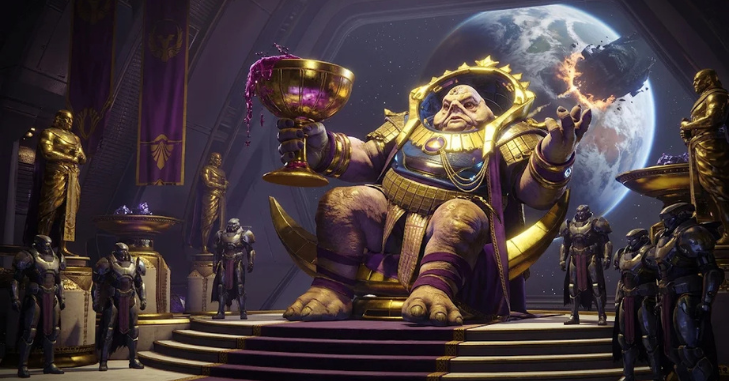
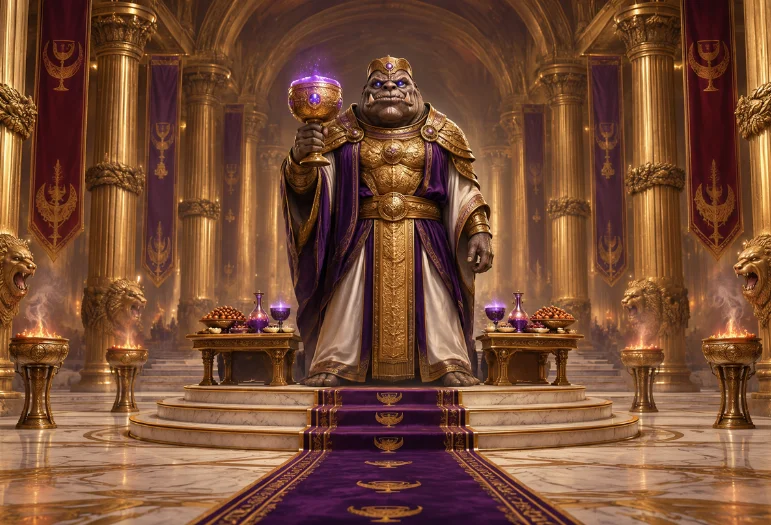
Emperor Calus was once the ruler of the Cabal Empire, centuries before Guardians encountered him directly. He presented himself as a ruler of abundance, celebration, and pleasure instead of endless military conquest. Lore records also show that his version of events often serves his own ego.
His rule challenged older Cabal traditions built around military authority and conquest. He dismantled the Praetorian Guard and redirected wealth toward a more extravagant imperial culture. That approach won supporters while creating powerful enemies inside the empire.
His personality defines nearly every part of his story. Calus wanted loyalty, admiration, spectacle, and recognition from everyone around him. Even after losing his throne, he continued acting as if the universe should revolve around his desires.
How Calus Lost the Cabal Empire
The emperor’s downfall came from a conspiracy led by people within his own government and family. Dominus Ghaul became the central military figure behind the coup. The Consul and several Cabal officials also helped remove Calus from power.
His daughter Caiatl was also involved in the overthrow. Their relationship later became one of Destiny 2’s most personal Cabal conflicts. Caiatl viewed her father’s rule as dangerous, self-indulgent, and disconnected from the empire’s survival.
The conspirators chose exile rather than execution. They placed the deposed ruler aboard the enormous Leviathan and sent him into deep space. That punishment separated him from his empire but gave him the setting for his next transformation.
What Happened to Calus During His Exile?
The Leviathan wandered far beyond the Cabal Empire after the coup. During that journey, Calus reached a region described in lore as an immense void. The experience convinced him that something far greater than ordinary empires existed beyond known civilization.
He interpreted that encounter as evidence that the universe faced an unavoidable end. Rather than resisting destruction, he became fascinated by the idea of witnessing everything disappear. His former appetite for luxury slowly merged with a much darker obsession.
This shift explains why his later behavior seems different from ordinary political revenge. Recovering the Cabal throne stopped being his only goal. He wanted to stand beside whatever power would survive long enough to bring existence to its conclusion.
Why the Leviathan Matters
The Leviathan became far more than an exile ship. It functioned as a mobile palace, military base, factory, and symbol of Calus’s continuing claim to imperial greatness. Destiny 2 players first experienced that power directly through the original Leviathan raid.
The raid also introduced one of the character’s defining tricks. Guardians fought a robotic duplicate rather than simply killing the real ruler. Later lore reinforced the idea that he used mechanical copies while his physical condition changed elsewhere.
That detail made the raid feel less like a normal assassination attempt. Calus treated Guardians as contestants, potential servants, and entertainment. His invitation was designed to test whether humanity’s strongest warriors could become part of his personal mythology.
Players exploring more Destiny mechanics can also use GamerLume’s Destiny symbols and Vow glyph guide. It covers the shared symbol vocabulary used across several Destiny 2 activities. The guide is especially useful for players returning to raid and puzzle content.
Calus, the Guardians, and the Shadows
Calus repeatedly tried to recruit powerful individuals as his Shadows. These warriors were meant to represent the strongest members of different species. Guardians interested him because they repeatedly survived threats that destroyed armies and civilizations.
His relationship with the player character therefore mixed admiration with manipulation. He offered weapons, treasure, and prestige while encouraging Guardians to accept his worldview. The gifts were never purely generous because every reward reinforced his desire for loyalty.
This dynamic became especially visible during the Season of Opulence. The Menagerie turned combat into another imperial spectacle organized for his enjoyment. He continued behaving like a ruler even though the empire itself had moved beyond him.
Why Caiatl Rejected Her Father
Caiatl represents almost the opposite response to Cabal decline. She values military discipline, responsibility, and survival more than her father’s endless celebration. Bungie later positioned her as the recognized Cabal empress who could negotiate directly with humanity.
Their conflict is more than a simple family disagreement. Calus wants the universe to validate his personal greatness, while Caiatl carries responsibility for an endangered people. That difference becomes increasingly important as the Witness threatens every surviving civilization.
Caiatl also gives players another perspective on her father. His own writings often present him as a generous visionary betrayed by lesser minds. Her actions and other lore sources make that flattering self-portrait much harder to accept.
How Calus Became a Disciple of the Witness
His obsession with the coming end eventually brought him closer to the Witness. Season of the Haunted showed the Derelict Leviathan filled with Nightmares and tied to the Pyramid on the Moon. Calus sought a deeper connection with the power he had worshipped for years.
He no longer wanted to admire destruction from a distance. He wanted recognition from the force responsible for shaping it. That ambition pushed him beyond the role of a strange exiled emperor.
By Lightfall, the transformation was complete. The Witness had remade him as one of its Disciples and placed the Shadow Legion under his command. His new position finally gave him the status he had spent years trying to earn.
Calus in Lightfall and the Battle for Neomuna
Lightfall sends Calus and the Shadow Legion to Neptune. Their objective centers on the Veil, an object the Witness needs for its larger plan. Guardians travel to Neomuna and fight through his forces while trying to stop that connection.
His final campaign role exposes the weakness beneath his grand personality. He possesses enormous power but still craves approval from the Witness. The relationship is not presented as one between equals.
That insecurity matters during the campaign. Calus finally receives the cosmic importance he wanted, yet he remains another instrument. His rise to Disciple status gives him power without giving him true independence.
For broader gaming coverage after finishing the campaign, GamerLume’s Gaming section collects current guides, walkthroughs, and character explainers. It also provides a natural place to follow future Destiny coverage. The section currently includes GamerLume’s Destiny symbol reference.
How Does Calus Die?
The Guardian defeats Calus during the final Lightfall mission, Desperate Measures. The battle takes place after the campaign reaches the Veil beneath Neomuna. He fights first with heavy ranged attacks before shifting into a faster close-range phase.
His defeat ends his career as a Disciple. It also closes the path that began with his overthrow and exile many years earlier. The ruler who wanted to stand beside the end of existence dies before seeing the Witness complete its plan.
The ending fits the character because his ambition never gives him what he truly wants. He gains wealth, followers, transformations, and cosmic power. None of those things provide the lasting recognition he expects.
Why Calus Still Matters to Destiny 2 Lore
Calus connects several major eras of Destiny 2. His story stretches from the Red War period and Leviathan content to the Witness storyline. Few villains bridge that much of the game’s history.
He also helps explain the Cabal as more than a single enemy faction. Through Ghaul, Caiatl, the Loyalists, and the Shadow Legion, players see competing ideas about Cabal identity. His family conflict gives political history a personal dimension.
His story also shows how the Witness attracts followers. Raw strength alone does not explain every Disciple. Pride, fear, ambition, and the desire for meaning can make powerful characters vulnerable to manipulation.
Readers who enjoy villain breakdowns can compare his arc with GamerLume’s Zant story, powers, and boss fight explainer. The site covers character stories alongside practical walkthroughs. That makes it a useful next stop after lore-heavy Destiny topics.
Final Takeaway
Calus works because his story changes without losing its central theme. He starts as an emperor obsessed with admiration and finishes as a servant still seeking approval. Every stage adds more power while exposing the same insecurity.
That arc also ties together the Cabal, Caiatl, the Leviathan, and the Witness. Understanding his history makes several Destiny 2 campaigns and seasons easier to follow. His defeat in Lightfall ends the character, but it does not erase his impact on the game’s wider story.
Frequently Asked Questions
Is Emperor Calus really dead?
Yes. The Guardian kills him during the final Lightfall campaign mission on Neomuna. Current Destiny lore treats that confrontation as the end of his physical story.
Was the Calus in the Leviathan raid a robot?
Yes, the raid encounter involved a robotic likeness rather than a straightforward fight with his original body. Later lore references multiple mechanical facsimiles associated with him. That explains why defeating the raid boss did not end his story.
Is Caiatl Calus’s daughter?
Yes, Caiatl is his daughter and later becomes Empress of the Cabal. Bungie’s Season of the Chosen material identifies her as the daughter of the deposed emperor. Their opposing values shape much of the later Cabal storyline.
Why did Calus join the Witness?
He became convinced that the universe would eventually end and wanted a place beside the power responsible. The Witness offered status, transformation, and proximity to that goal. His need for recognition made the offer especially appealing.
What was the Leviathan?
The Leviathan was his enormous ship and palace during exile. It later appeared as a major Destiny 2 raid location and returned in corrupted form. The ship became the clearest symbol of his wealth, excess, and continuing influence.