


Goss Harag is a dangerous Fanged Beast introduced in Monster Hunter Rise (2021). This icy predator uses powerful foreleg attacks, freezing breath, and enormous ice weapons. You can find it in the Frost Islands, with additional encounters available in the Sunbreak expansion. The key to winning is recognizing its rage patterns, targeting its ice-covered arms, and exploiting its Fire weakness. Quick answer: Use a Fire-element weapon, carry Nulberries, and target the head, forelegs, and ice clumps. Watch for its freezing breath before it creates dangerous ice blades. Attack the blades to trigger a knockdown, then punish its recovery. Keep Wirebugs available for escaping heavy attacks and avoiding Iceblight follow-ups.
Quick Monster Information
| Detail | Information |
|---|---|
| Monster name | Goss Harag |
| Classification | Fanged Beast |
| First appearance | Monster Hunter Rise (2021) |
| Expansion appearance | Monster Hunter Rise: Sunbreak (2022) |
| Main habitat | Frost Islands |
| Other maps | Varies by quest and rank |
| Element | Ice |
| Main weakness | Fire |
| Secondary elemental option | Thunder |
| Status ailment | Iceblight |
| Main breakable parts | Head, back, and forelegs |
| Important preparation | Nulberries and a Fire weapon |
| Main combat strategy | Break the ice weapons and attack during recovery |
Key Takeaways
- This monster is best known for the Frost Islands, and other maps can appear depending on quest and rank.
- Fire weapons offer the strongest elemental matchup.
- Its icy forearm weapons form after its freezing breath sequence.
- Breaking the ice weapons can knock the monster down.
- Iceblight slows Wirebug recovery, making defensive movement harder.
- Nulberries remove Iceblight and help restore combat mobility.
- The head and ice-covered forelegs offer valuable damage opportunities.
Where Does Goss Harag Appear?
The beast first appears in Monster Hunter Rise, where its main hunting ground is the Frost Islands. Hunters encounter it through Village and Gathering Hub quests. It roams the snowy environment and uses the surrounding cold to create its signature weapons. The Sunbreak expansion adds Master Rank hunts for this monster, so check the quest listing for the map. Its Master Rank version retains the familiar ice-based combat style but introduces additional attack variations. You should expect more demanding combinations and less time to punish mistakes. For another example of a mechanics-focused boss fight, see our Azhdaha boss guide. In the Frost Islands, check the monster’s location through the map before approaching. Its starting area can vary between quests, so don’t assume every hunt begins in the same place. The monster can also move between areas during combat.
Weaknesses and Resistances
Fan wiki data: Fire is its strongest elemental weakness, while Thunder offers another useful option. Water, Ice, and Dragon provide little value against this monster. Prioritize Fire damage whenever your available equipment allows it.
| Element or target | Effectiveness |
|---|---|
| Fire | Strong weakness |
| Thunder | Secondary weakness |
| Water | Low value |
| Ice | Low value |
| Dragon | Low value |
| Head | Excellent physical target |
| Ice clumps | Excellent physical target |
| Forelegs | Useful physical target |
These weakness recommendations reflect fan-maintained monster hitzone references, not an independently tested damage ranking. Your weapon type also affects which body parts offer the best physical damage. Cutting and blunt weapons benefit from targeting the head and ice clumps. Ranged hunters should also consider the head and exposed ice formations. Avoid wasting attacks against the tougher torso when a better opening exists. Positioning matters because its forelegs can punish hunters who stay directly in front.
Breakable Parts and Ice Weapon Mechanics
Breaking its body parts provides additional rewards and creates useful combat opportunities. The main targets include the head, back, and forelegs. Focus on exposed areas rather than attacking its torso without a clear reason. The ice formations on its arms deserve special attention. These temporary weapons appear during rage and can be damaged directly. Destroying them can break both formations, stagger the monster, and create a valuable knockdown. Try to attack the ice clumps when this Fanged Beast finishes a large swing. Its recovery animation provides a safer opportunity than approaching during an active combo. Repeatedly targeting these formations can make the fight easier.
Understanding Rage Mode and Iceblight
The monster changes its behavior when enraged. Its body turns red, and it becomes more aggressive with stronger attacks. This visual change is your warning to increase your distance and watch its movements. During the transformation sequence, it releases freezing breath toward its forearms. The monster then forms an ice blade on one arm and an additional ice weapon in later ranks. These weapons extend its attack reach and make its physical strikes more dangerous. Its ice-based attacks can inflict Iceblight. This ailment slows Wirebug recovery, which makes emergency escapes less reliable. Nulberries provide a straightforward way to remove the effect during the hunt. Don’t treat rage mode as a signal to stop attacking entirely. Instead, change your positioning and wait for longer recovery animations. Breaking the ice weapons can interrupt its pressure and create an opening.
Attack Patterns and How to Avoid Them
Learning its major attacks makes the encounter easier to control. Most dangerous moves become predictable after you recognize their starting animations. Avoid standing directly in front of the monster for extended periods.
Ice Blade Slashes
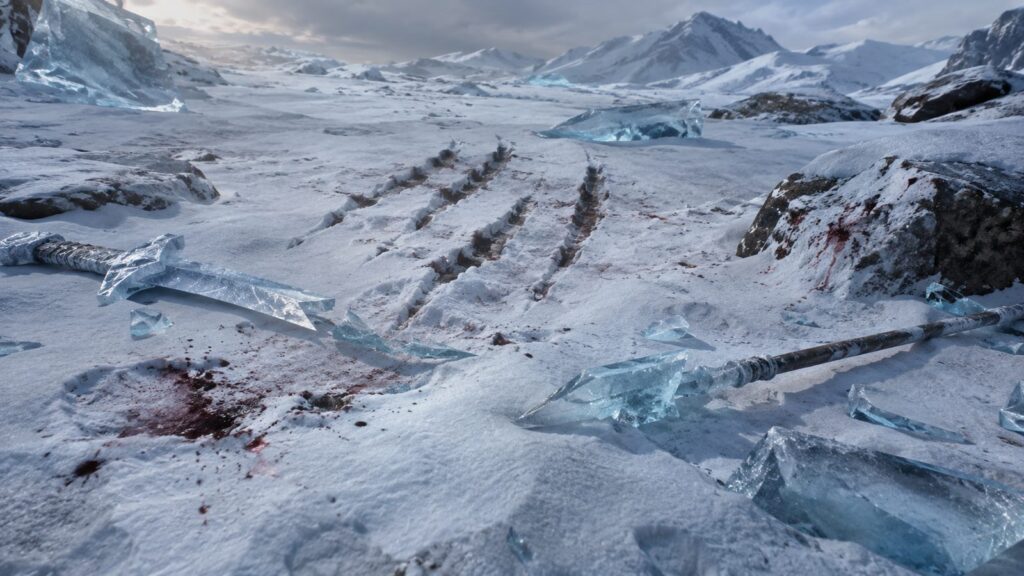
Its ice blades increase the reach of its normal foreleg attacks. It can deliver sweeping slashes, powerful swings, and wider combinations. These attacks can catch hunters who dodge too early or remain beside its arms. Watch the direction of its shoulders before moving. Dodge through or away from the incoming swing, then reposition toward its side or rear. Wait for the final slash before committing to a longer attack animation.
Belly Slam
This monster can throw its weight forward and slam its body into the ground. This attack threatens hunters standing near its front and underneath its body. It can also create a dangerous follow-up opportunity for the monster. Move sideways as it prepares to rise or launch itself. Avoid rolling directly underneath its landing point. Once it finishes the slam, use the recovery window to attack its head or forelegs.
Ice Breath
The freezing breath attack is especially important because it can lead into its weapon-forming sequence. The beast projects ice toward its target, sometimes using sweeping movements. The beam can catch hunters who assume that staying far away guarantees safety. Watch its head and mouth as it prepares the attack. Move away from the beam’s path instead of attempting to trade damage. After the breath sequence ends, prepare for the ice weapons and the next attack pattern.
Grab Attack
Its grab is dangerous when hunters remain too close to its front. The monster can reach forward and catch an exposed hunter before following through with damaging force. Watch for its forward-reaching movement and avoid staying directly in its path. Use a sideways dodge when you recognize the grab preparation. Keep enough distance to react instead of committing to a slow weapon animation. If the attack connects, recover carefully and prepare for another offensive sequence.
Ranged Ice Weapon Throws
This Fanged Beast can throw its formed ice weapons toward hunters at a distance. This makes retreating indefinitely an unreliable defensive strategy. Keep moving laterally and avoid predictable straight-line movement. The throw sequence can also signal a change in its rage phase. Watch for the weapons leaving its hands before moving back into attack range. Use the following recovery to create a fresh damage opportunity.
How to Prepare for the Hunt
Preparation can reduce the difficulty of this encounter considerably. You don’t need a complicated build to fight effectively. A suitable elemental weapon, basic recovery supplies, and defensive awareness provide a good starting point. Bring these useful items:
- Nulberries to remove Iceblight.
- Healing Potions and Mega Potions for recovery.
- A Fire-element weapon for exploiting its main weakness.
- Well-prepared armor with suitable defensive skills.
- Flash Bombs or traps when you need additional control.
- A Palico or Palamute setup that supports your preferred playstyle.
Fire weapons should be your first consideration when choosing equipment. Thunder is another option if your strongest available weapon uses that element. Avoid building around Ice, Water, or Dragon damage for this particular encounter. Check your armor before departing. Equipment with suitable ice resistance can help reduce the threat of its elemental attacks. Defensive skills and reliable healing matter more than forcing an aggressive damage setup.
Wirebug and Silkbind Strategies
Wirebugs are valuable because the monster combines heavy physical attacks with Iceblight. You need mobility to escape its slashes, slams, and freezing breath. Keep an eye on your Wirebug availability throughout the encounter. Use Wirebug movement to escape large attack zones rather than spending every charge offensively. A well-timed aerial reposition can prevent a dangerous follow-up. This is particularly useful after its belly slam or sweeping ice attacks. Silkbind attacks provide opportunities to punish the monster during recovery. Their exact usefulness depends on your weapon and equipped Switch Skills. Save offensive Silkbind attacks for moments when it finishes a committed animation. You can also use Wirefall after being knocked away when the situation allows it. Don’t immediately recover toward the monster if it is preparing another strike. Move toward open ground and restore your positioning before attacking again. One useful strategy is to combine weapon-specific Silkbind attacks with ice-clump targeting. Breaking its weapons can interrupt the encounter and create a longer opening. That opening gives slower weapons time to deliver their stronger attacks.
Materials, Rewards, and Equipment
Hunting the beast provides materials for crafting its weapon and armor equipment. Rewards can come from carving, capturing, quest completion, and breaking eligible parts. Your exact rewards depend on the quest rank and the reward system. Common material categories include this Fanged Beast Hide, Fur, Brace, Claw, Horn, and ice-related crafting materials. Higher-rank hunts provide upgraded material versions. Master Rank encounters introduce their own material requirements for Sunbreak equipment. Breaking specific parts can improve your chances of receiving related rewards. Target the head, back, and forelegs when you want to collect more crafting materials. Check the in-game Hunter’s Notes for the precise reward pool at your current rank. The the monster armor set and weapon tree offer equipment themed around the monster. Their crafting requirements vary across Low Rank, High Rank, and Master Rank. Review the smithy’s material list before farming, so you can focus on the rewards you still need. If you’re farming for a specific item, choose a quest that matches its required rank. Capture and part-break rewards can offer additional routes to materials. Avoid assuming that every reward has the same drop chance across all ranks.
Frequently Asked Questions
What is Goss Harag weak against?
It is primarily weak to Fire, with Thunder offering another useful elemental option. Fan wiki weakness data also identifies its head and ice clumps as strong physical targets. Your weapon type determines the most effective target.
Where can you find Goss Harag?
You can find the beast in the Frost Islands, and other maps can appear depending on the quest and rank. Sunbreak adds Master Rank hunts, so check the quest listing for the map.
How do you break its ice blades?
Attack the ice formations on its forelegs when you have a safe opening. Deal enough damage to the formations to break its temporary weapons. This can stagger the monster and create a knockdown opportunity.
How do you cure Iceblight?
Use a Nulberry to remove Iceblight during the hunt. The ailment slows Wirebug recovery and makes defensive movement harder. Carry several Nulberries if you struggle to avoid its ice attacks.
Does it have new attacks in Sunbreak?
Yes, its Master Rank version includes additional ice-blade attack variations. It can use more aggressive combinations and form its weapons through a quick movement. Learn the new timing before committing to long attacks.
What materials does it drop?
Its rewards include hide, fur, claws, braces, horns, and ice-related materials. Higher ranks provide upgraded versions and additional crafting requirements. Part breaks, captures, carving, and quest rewards all contribute to material collection.
Final Hunting Advice
This Fanged Beast becomes easier once you understand how its ice weapons control the fight. Use Fire damage, watch for its breath animation, and attack the temporary weapons whenever you find a safe opening. Nulberries and careful Wirebug management also help you survive its strongest combinations. Don’t chase damage while it is actively swinging its ice blades. Wait for the final attack in a sequence, reposition, and punish the recovery. With patience and consistent part targeting, you can turn its most dangerous phase into your best opportunity for a knockdown. For more boss strategies, explore GamerLume’s gaming guides. You can also read the Zant boss fight breakdown for another example of a mechanics-focused encounter guide. —