
LSU fired Brian Kelly on October 26, 2025. The school then spent a month arguing it shouldn’t have to pay him, and it lost that argument in late November. What follows is the money, the court file, and where the coach landed.
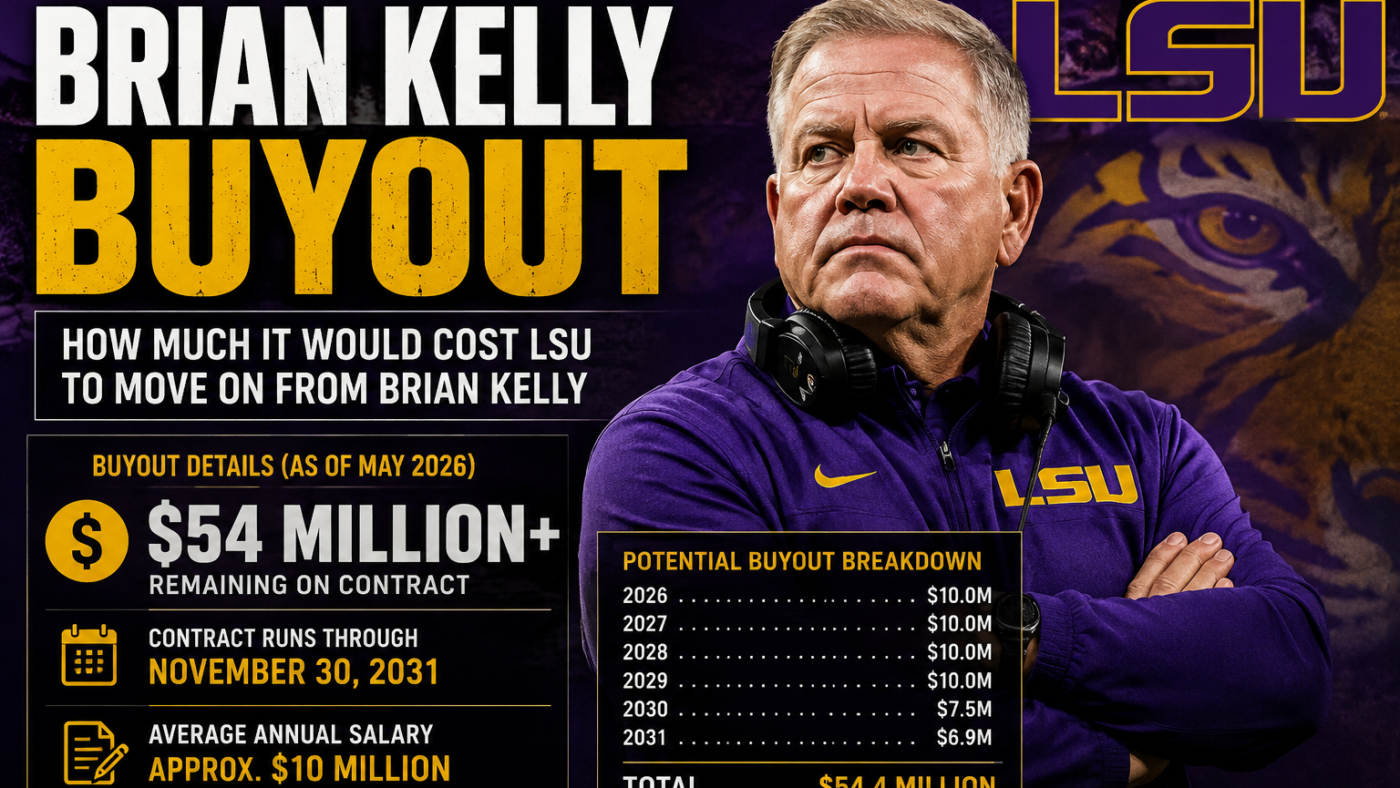
Short answer: the Brian Kelly buyout is worth roughly $54 million, and LSU agreed to pay every dollar of it. The money arrives in yearly installments of about $9 million through 2031, cut by whatever Kelly earns somewhere else. He now calls college football games for CBS Sports.
The Numbers At a Glance
| Item | Detail |
| Fired | October 26, 2025, a day after a 49-25 home loss to Texas A&M |
| Record at LSU | 34-14 overall, 19-10 in the SEC |
| Amount owed | About $54 million (reported as $53.8 million at the firing) |
| Payment shape | Roughly $9 million a year through 2031, not a lump sum |
| Offset clause | Yes. Outside earnings reduce what LSU pays. |
| Lawsuit | Filed November 10, 2025, docket 770,421, 19th Judicial District Court |
| How it ended | A without-cause termination letter on November 26, 2025 |
| National rank | Second-largest coaching buyout in college football history |
| Job now | CBS Sports college football analyst, on air from August 29, 2026 |
Key Takeaways
- LSU owed the full amount because it removed Kelly for losing, not for misconduct.
- The school offered $25 million, then $30 million. He said no to both.
- His lawsuit forced LSU to put the words “without cause” in writing.
- The offset clause means his CBS paycheck lowers LSU’s annual bill.
- Only Jimbo Fisher’s $77 million exit from Texas A&M is bigger.
How the Bill Got This Big
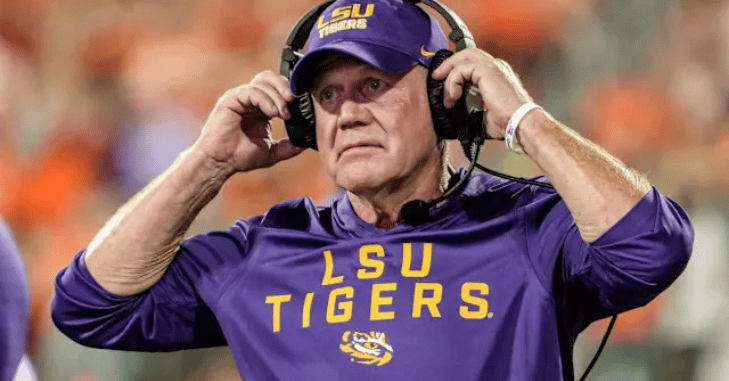
Kelly arrived from Notre Dame in late 2021 on a ten-year contract that ran through 2031. Four years later, LSU sat at 5-3, the Texas A&M loss emptied Tiger Stadium early, and athletic director Scott Woodward pulled the trigger the next morning. Woodward himself was gone four days later.
Brian Kelly’s buyout liquidated damages in a deal that long are brutal. Six seasons remained, and the contract valued them at close to $9 million each. That math handed an eight-figure headache to a public school with no permanent president in the building. Boosters started raising money almost immediately. The politics turned loud even faster.
Louisiana Governor Jeff Landry said the quiet part out loud on October 29, 2025. “We’ve got a $53 million liability. We are not doing that again,” he said. “I’m tired of rewarding failure in this country and then leaving the taxpayers to foot the bill.” That pressure shaped what LSU did next. It also shaped the search that followed, one of the loudest college football coaching moves and transfers of the year.
LSU Tried To Pay Less, And It Didn’t Work
Requires conduct issues. The school never had a clean path to zero. A “for cause” firing wipes out the buyout, but it needs conduct, not a bad October. LSU floated allegations of misconduct without filing anything formal, and it stopped short of confirming that Kelly had been terminated at all.
The two offers he turned down
- $25 million, no offset language. Cash he could keep on top of any future salary. He refused.
- $30 million in two installments. Faster money, still barely half the contract. He refused that too.
His attorneys argued the delay was doing real damage. They pointed to LSU’s refusal to confirm a without-cause termination and to its unsupported misconduct allegations. That conduct, they wrote, “has made it nearly impossible for Coach Kelly to secure other football-related employment,” and hiring season was already running. A coach in limbo does not get hired.
What the Public Record Shows
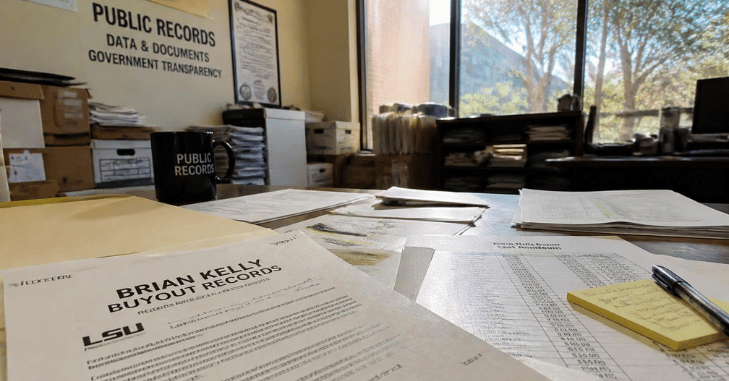
This is the part most write-ups skip. Kelly sued on November 10, 2025, and the case surfaced in LSU’s own paperwork three weeks later. The published minutes of the LSU Board of Supervisors meeting of November 21, 2025, name the case as docket 770,421, Section 26, in the 19th Judicial District Court.
The same minutes record what the board did about it. Members voted unanimously to authorize the president, working with the general counsel, to “send Brian Kelly written notice of termination under his employment agreement.”
Read that carefully. Nearly four weeks after the firing, LSU had not sent the letter. Five days later, on November 26, President Wade Rousse sent it, and it said without cause. That single phrase ended the fight and locked in the full payout. Every figure here traces back to a filing, a board record, or a named report.
What the Offset Clause Really Does
Offset language, sometimes called a duty to mitigate, is the quiet clause that decides how much a school really spends. Kelly’s contract has one. Lane Kiffin’s does not, which tells you how badly LSU wanted its next coach.
In Practice, Three Things Follow From It:
- Kelly has to look for work in coaching or media rather than sit out the six years.
- Whatever he earns comes off the roughly $9 million LSU owes that year.
- A head coaching job at the market rate could shrink the school’s bill dramatically.
So the $54 million is a ceiling, not a receipt. Nobody outside the two legal teams knows the running total, because it depends on contracts Kelly signs between now and 2031.
Where the Brian Kelly Buyout Ranks Nationally
| Coach | School | Year | Buyout | Offset? |
| Jimbo Fisher | Texas A&M | 2023 | $77 million | No |
| Brian Kelly | LSU | 2025 | About $54 million | Yes |
| James Franklin | Penn State | 2025 | $49.7 million | Yes |
Second place, and the gap to first is the point. Fisher’s deal carried no offset at all, so Texas A&M owed the sticker price no matter what he did next. Kelly’s does carry one. His final number will almost certainly settle below the headline.
The wider trend is uglier. Front Office Sports counted more than $1 billion in coaching buyouts across the College Football Playoff era, with about $185 million of that in a single season. If you follow the games rather than the accounting, our sport coverage and match analysis hub covers the other side.
Where Is He Now?
Television, for the moment. CBS confirmed on July 27, 2026, that Kelly joins its college football coverage as a game analyst in a three-person booth on CBS Sports Network. He also takes a studio seat on Inside College Football each Tuesday, plus appearances on CBS Sports HQ.
His first assignment is Jacksonville State at North Dakota State on August 29, 2026, followed by Texas Tech at Oregon State and BYU at Colorado State. He had already tested the studio in April on the network’s NFL Draft coverage.
Retirement isn’t the plan. He told USA Today that he still wants “to make a difference” and has “a lot still to give” in the sport. At 64, with a 297-109-2 career record and a contract that rewards him for going back to work, a return to the sideline would suit both sides. If you’re tracking that kind of second act, you’ll find more in our career profiles of coaches and athletes.
Conclusion
The Brian Kelly buyout stands as one of the most expensive coaching exits in college football history, illustrating how long-term contracts can create major financial obligations for athletic programs. LSU ultimately honored the contract after confirming Kelly’s dismissal was without cause, resulting in a payout worth roughly $54 million through 2031.
While the contract’s offset clause allows Kelly’s future earnings to reduce LSU’s annual payments, the buyout remains a landmark case in college sports. As Kelly begins his broadcasting career with CBS Sports and keeps the door open for a return to coaching, the final cost to LSU will continue to evolve, making this a story worth following in the years ahead.
Frequently asked questions
Yes. After the November 26, 2025, letter confirmed a without-cause termination, LSU agreed to pay the full amount rather than keep fighting. The payments run through 2031.
Because a for-cause firing needs documented misconduct or a contract breach; losing three of four games in October is neither, and LSU never filed formal charges to back its public hints.
It does. His broadcasting salary is deducted from that year’s payment. A broadcast contract is worth far less than a coaching one, so the reduction is real but modest.
Athletic department revenue and donors, not the state general fund. Landry’s objection was about taxpayers, and LSU is carrying Ed Orgeron’s older buyout at the same time.
No. Jimbo Fisher’s $77 million from Texas A&M still leads. Kelly sits second, ahead of James Franklin at Penn State.