
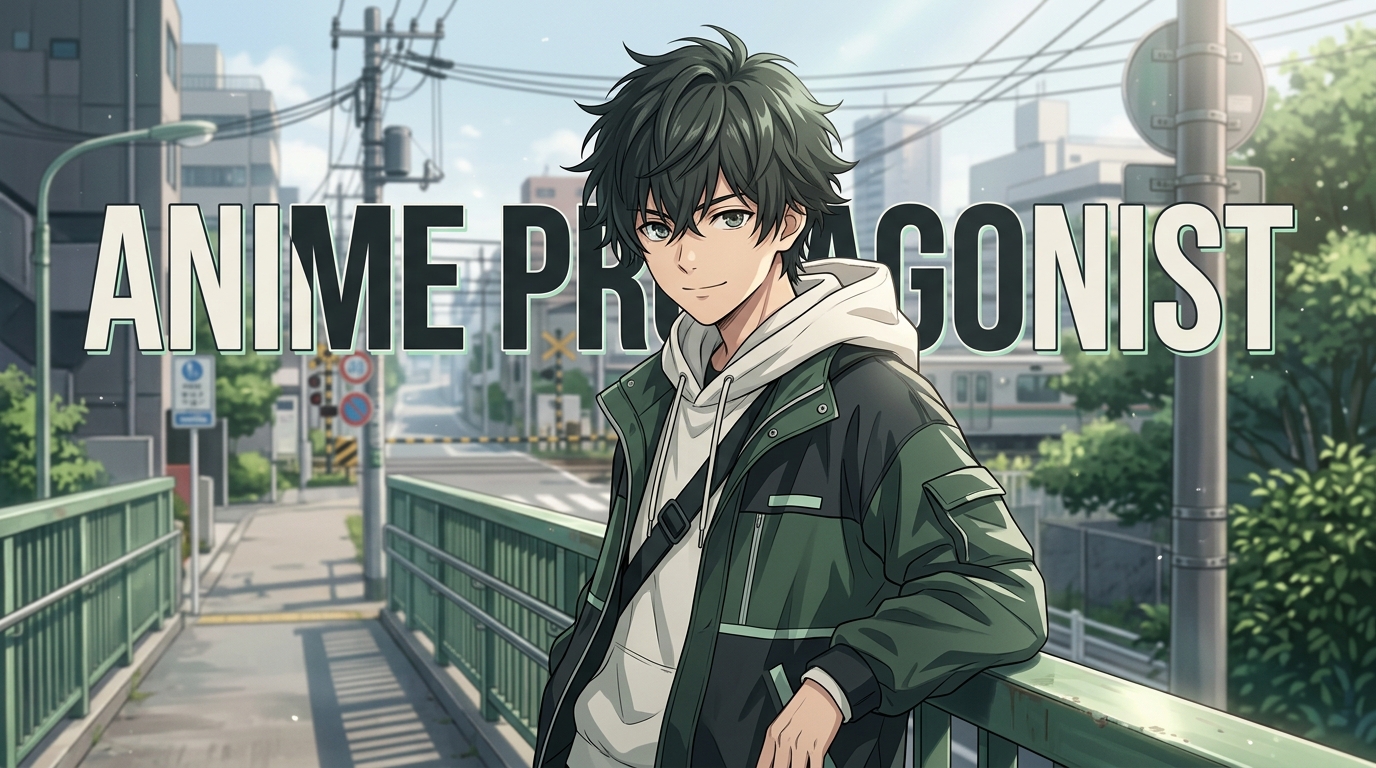
An anime protagonist is the central character whose goals and choices drive the story. Viewers usually follow this character most closely. Being central does not mean the character must be heroic, powerful, or morally good.
Anime uses many kinds of leads, from hopeful adventurers to calculating antiheroes. Their personalities often shape a series’ tone. Understanding their narrative role also makes character arcs and conflicts easier to follow.
| Key point | What it means |
|---|---|
| Basic role | The central character driving the main story |
| Must they be heroic? | No |
| Can there be several? | Yes, especially in ensemble stories |
| Main opposition | Often an antagonist, society, nature, or internal conflict |
| Common traits | Clear goals, meaningful choices, conflict, and development |
| Popular types | Hero, antihero, underdog, strategist, reluctant lead, and ensemble lead |
| Most important quality | Their actions affect the direction of the story |
Quick answer: An anime lead is the character around whom the main action develops. The audience usually experiences important conflicts through that character. A strong lead has clear motivations, meaningful obstacles, and decisions that change the story. The character does not need to be heroic or even likable.
Key Takeaways
- A main character and a hero aren’t always the same.
- The lead usually has goals that organize the central plot.
- Antagonists oppose those goals but are not automatically villains.
- Strong central characters usually make meaningful decisions.
- Character growth can be positive, negative, or intentionally limited.
- Anime uses several recurring lead-character patterns.
- Ensemble series can have more than one central viewpoint.
What Is an Anime Protagonist?
A protagonist is the main character around whom a story’s action centers. That matches the standard dictionary definition. Anime applies the same storytelling principle through animation rather than prose or theater.
The lead usually wants something that drives the plot. That goal might involve winning, surviving, protecting someone, discovering something, or changing society. Obstacles then force the character to act and reveal what matters to them.
Screen time alone does not determine the role. A supporting character can sometimes receive more attention during a particular arc. The central role depends more on whose journey organizes the larger narrative.
Protagonist vs. Hero vs. Main Character
These terms often overlap, but they do not mean exactly the same thing. A hero usually embodies admirable or morally positive behavior. A protagonist only needs to occupy the story’s central narrative position.
Light Yagami from Death Note shows the difference clearly. The series follows his plans, choices, and escalating conflict with L. His morality becomes increasingly disturbing, yet he remains the central figure.
An antagonist isn’t automatically a villain. The antagonist is simply the force opposing the lead’s main objective. That force can be another person, an institution, nature, or even internal fear.
Seven Common Types of Anime Main Characters
1. The Classic Hero
The classic hero pursues a goal while protecting people or defending a moral principle. These characters often value friendship, perseverance, courage, and personal responsibility. Their growth usually comes through increasingly difficult tests.
Naruto Uzumaki fits this model through his desire for recognition and belonging. His ambitions become connected with protecting the people around him. That combination gives his personal goal broader meaning.
2. The Underdog
An underdog begins with a disadvantage that seems difficult to overcome. The weakness might involve skill, status, confidence, knowledge, or social acceptance. Progress becomes satisfying because viewers can measure the distance traveled.
These characters work best when improvement has a believable cost. Training, failure, sacrifice, and repeated setbacks make success feel earned. Instant mastery can weaken an underdog story’s appeal.
3. The Overpowered Lead
Some series start with a central character who already possesses exceptional strength. The conflict can’t rely entirely on winning fights. Writers must instead create emotional, social, strategic, or ethical challenges.
Saitama from One-Punch Man demonstrates that approach through comedy and frustration. His strength removes suspense from many battles. Instead, the story gains interest from his boredom and relationships.
4. The Antihero
An antihero occupies the central role without matching traditional heroic ideals. These characters may be selfish, ruthless, dishonest, or morally conflicted. Their appeal often comes from the difficult choices they make rather than moral purity.
Good antiheroes still need understandable motivations. Viewers do not need to approve of every decision. They need enough context to understand why the character makes it.
5. The Strategist
Strategist characters solve problems through planning, deduction, manipulation, or careful observation. Physical strength may matter less than reading opponents correctly. Their stories often create tension by hiding part of the plan.
This approach appears frequently in psychological thrillers and competition stories. Success depends on information and timing, not raw power. Failure becomes interesting when another character predicts the strategy.
6. The Reluctant Lead
A reluctant lead does not initially want the responsibility placed upon them. Events, relationships, or external pressure pull them into the central conflict. Their struggle often concerns accepting responsibility without losing their identity.
This type works well because hesitation creates internal conflict. The character must decide why continued involvement matters. That decision can become more meaningful than the original external threat.
7. The Ensemble Lead
Some anime distribute attention across several important characters. No single person completely owns every major storyline. Instead, different viewpoints contribute to the same larger conflict.
Ensemble storytelling can create a broader view of the fictional world. It also lets writers explore competing motivations without treating one perspective as absolute. The challenge is giving each central character enough meaningful development.
What Makes a Great Anime Main Character?

A strong lead usually has a clear motivation that viewers can understand. The motivation does not need to be noble or complicated. It needs to explain why the character keeps making consequential choices.
Good characters also face obstacles that attack more than their physical abilities. A difficult opponent may challenge confidence, loyalty, beliefs, or identity. Those pressures reveal personality more effectively than exposition alone.
Growth matters, but development does not always mean becoming kinder or stronger. A character can deteriorate because of repeated choices. A flat character can also remain consistent while transforming everyone around them.
Agency is equally important. Strong central characters make choices that alter what happens next. A story feels weaker when its supposed lead only reacts to others’ decisions.
Why Anime Leads Often Feel Different From Western Superheroes
Anime draws on far more than one storytelling tradition, so broad comparisons require caution. Still, many long-running series give character progression unusual amounts of screen time. Viewers may follow the same person through years of fictional development.
Training arcs, school years, rivalries, friendships, and changing goals can receive entire episodes. That space lets smaller changes accumulate beside major battles. The resulting attachment often comes from familiarity rather than strength.
Anime also freely centers unusual moral viewpoints. A series can follow a criminal, monster, ordinary student, political revolutionary, or deeply flawed adult. The medium does not require its central figure to resemble a conventional superhero.
How Games Use Similar Character Roles
Story-driven games use many of the same narrative principles. A playable lead usually gives players a central perspective on the game’s conflict. Player choice can make that perspective more flexible than television storytelling.
GamerLume’s Resident Evil Requiem guide shows how one game can divide attention between two playable leads. Grace Ashcroft and Leon S. Kennedy provide different approaches to the same broader story. That structure resembles anime with rotating central viewpoints.
Character-focused games also blur the boundary between lead and supporting figure. GamerLume’s Raiden Shogun guide covers a character carrying major narrative importance without being the player’s permanent viewpoint. Story importance alone does not make every memorable character the central lead.
The same distinction appears with major antagonistic figures. GamerLume’s Pierro guide explains a character whose influence reaches across much of Genshin Impact’s larger story. Narrative importance and protagonist status remain separate ideas.
Character roles can also shift as ongoing games receive new stories. GamerLume’s Shadow Milk Cookie guide shows how a character can become central to major events. Long-running fictional worlds often change which characters receive the strongest narrative focus.
Why Character Goals Matter More Than Power
Power rankings attract attention, but strength alone rarely makes a character memorable. A powerful fighter without meaningful goals can feel disconnected from the plot. Motivation gives abilities a reason to matter.
Consider two characters with identical strength but different priorities. One may want revenge, while another wants to protect a family. Their powers might match, yet their choices would create completely different stories.
Goals also let audiences judge progress. Every victory, failure, and compromise can move the character closer to something. The best conflicts threaten the goal while testing why it matters.
How to Identify the Main Character in a Complicated Anime
Start by asking whose main objective organizes the largest part of the plot. Then watch which decisions cause the biggest changes. Those signals are more reliable than counting scenes.
Next, identify the viewpoint used during major emotional moments. Stories often return to their central character when consequences become personal. Supporting characters may dominate individual arcs without taking over the entire narrative.
Finally, look at the central conflict. Ask who has the most direct relationship with that conflict’s beginning, development, and resolution. Multiple answers may indicate an ensemble structure rather than one clear lead.
Frequently Asked Questions
What does anime protagonist mean?
The term anime protagonist refers to the central character driving an anime’s main narrative. Their goals and decisions usually organize the core conflict. They do not need to be morally good.
Is a protagonist always the strongest character?
No, strength has nothing to do with the technical storytelling role. A weaker character can still drive every major event. Powerful supporting characters remain supporting characters if the story centers elsewhere.
Can an anime have two protagonists?
Yes, stories can have two or several central characters. Dual-lead stories often divide viewpoint and plot responsibility between them. Larger ensemble series may distribute those duties across a whole group.
Can the main character be a villain?
Yes, the central character can behave like a villain. Protagonist describes narrative position rather than morality. A story can therefore follow someone whose actions viewers strongly oppose.
What is the difference between a protagonist and an antagonist?
The central character pursues the goal organizing the main story. The antagonist opposes that goal. Neither label automatically decides who is morally right.
What makes a main character interesting?
Interesting leads combine understandable motivations with meaningful choices and consequences. Their strengths should not erase every challenge they face. Internal conflicts can be as important as external enemies.
The Bottom Line
The best way to understand a central anime character is to focus on narrative function. Ask whose goals drive events and whose decisions reshape the conflict. That approach works better than assuming the strongest or kindest character must lead.
Once you recognize these roles, complicated casts become easier to understand. You can separate central characters from heroes, rivals, villains, and important supporting figures. You can also see why different character types produce different kinds of stories.
For more character breakdowns and story-focused gaming coverage, explore GamerLume’s current guides. Focus on who controls the story rather than who wins the biggest fight. That simple distinction explains much of what makes fictional characters memorable.